Showing posts with label factors. Show all posts

Monday, 9 February 2015

Prime Fall 2

Some of us are getting pretty good at Prime Fall. So, here's another level: Prime Fall 2. The difference is that this time the numbers go up to 30, not 20, which makes things a lot busier!


As before, your job is to hit the numbers that aren't prime.
And, as before, you can share how well you did in the comments below.

Friday, 19 December 2014

Divide and rule!

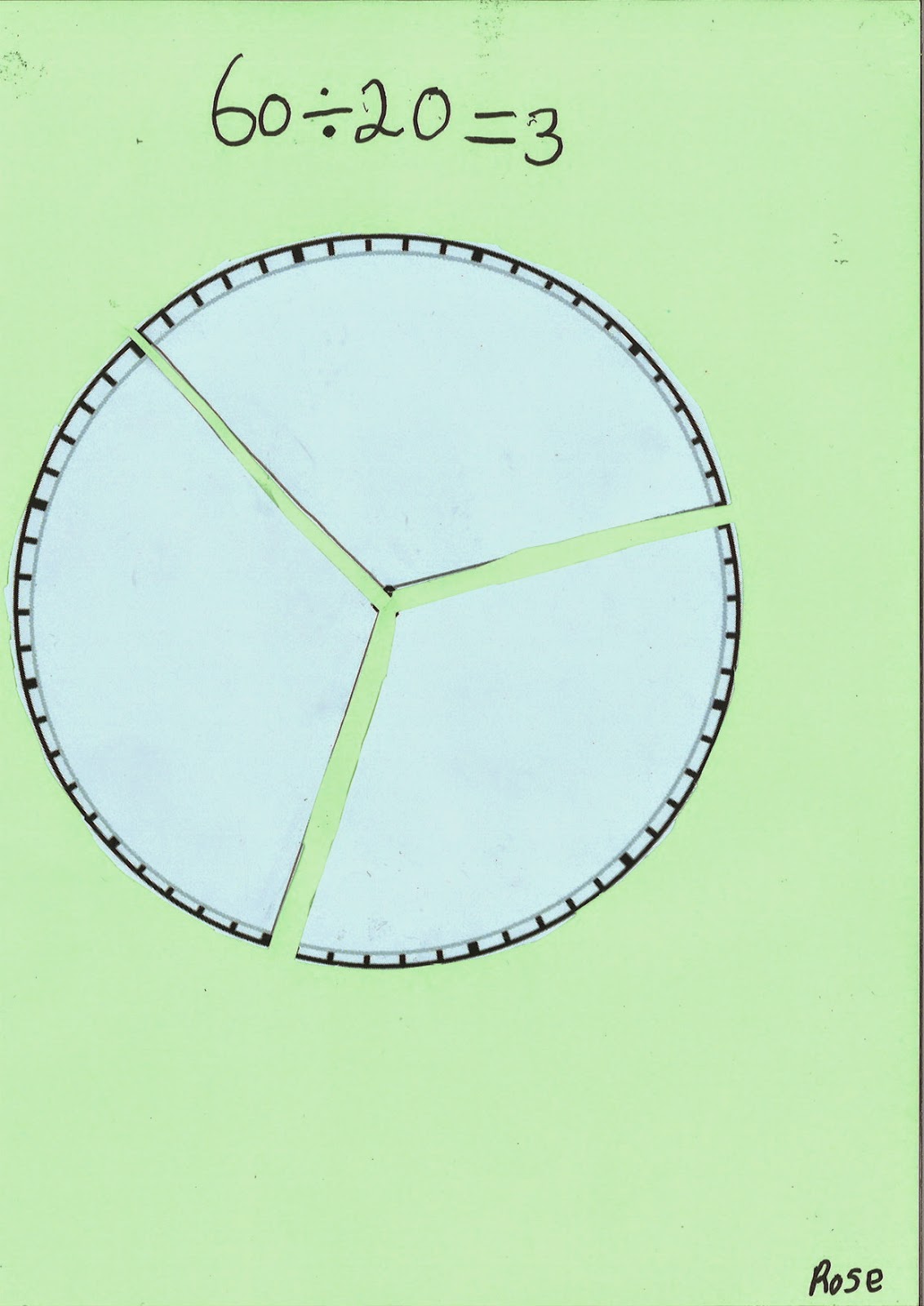
We've thought lots about our clock flowers. We've talked about multiplying, about factors, about prime numbers. It was time to mention division too. So we each chose one of the factors and literally divided the clock up into slices of that number of minutes.
 

Wednesday, 17 December 2014

Factors of sixty

After making a giant sixty-factor thing with Cuisenaire rods on Monday, Gabrielle, Marie and Rose were determined to make their own record of what they'd created. We had to stick some squared paper sheets together to make it big enough. They've added a few lines of rods of lengths we don't actually have, giving them new colours!
(Girls, I tidied it up a tiny bit, and turned it on its side so that it fits on the page!)

Can you see, there are still some factors of sixty missing? Do you know what they are?

How did there come to be sixty seconds in a minute, and sixty minutes in an hour? Apparently, it goes back a long way. Have a look at this video:

Tuesday, 16 December 2014

More clock flowers

We used the Scratch Clock Flower Project and noticed lots of things - have a look at our comments.
Then we together looked at which size jump "fitted", so that the jumps only went round once to create nice neat petals.
We scanned them and coloured them in quickly on Paint:


Meanwhile, Rose, Marie and Gabrielle volunteered to try a similar thing with Cuisenaire rods. Their line of rods had to be 60 long. Only numbers that "fitted" exactly into sixty could be added.
They did a great job. The line at the top is the twelves, made of ten+two because we don't have any twelve rods. Can you see any other big factors of sixty that are missing?

Sunday, 14 December 2014

Clock Flowers on Scratch

After some class work on clock flowers last week, I wrote a little bit of code on Scratch to make some more. You can make "petals" for the flower that have jumps of between 1 and 22. Try it out. Click the green flag to begin.


What do you notice?
What do you wonder?

Friday, 12 December 2014

Clock Flowers

We've been looking at time on analogue and digital clocks this week in Year 4, so we also did some clock counting, where, like the minutes on a clock, once you get to 59 you go back to zero again. It's a kind of round number line.

We looked at different sizes of jumps you could have going round the clock. The jumps look like petals on a flower, so we called them clock flowers. We all chose different sizes of jumps, drew them out, and then had a look to see...
What do I notice?
Mr Gregg asked Justus if his line would visit every mark around the clock. Justus saw from the vertical pattern in what he'd drawn that all the numbers would be included.
That's some great noticing!
Here's a slideshow of some of our work:


(If you'd like to have a go, here's a link to the Word document we used.)

Saturday, 6 December 2014

Prime Climb again

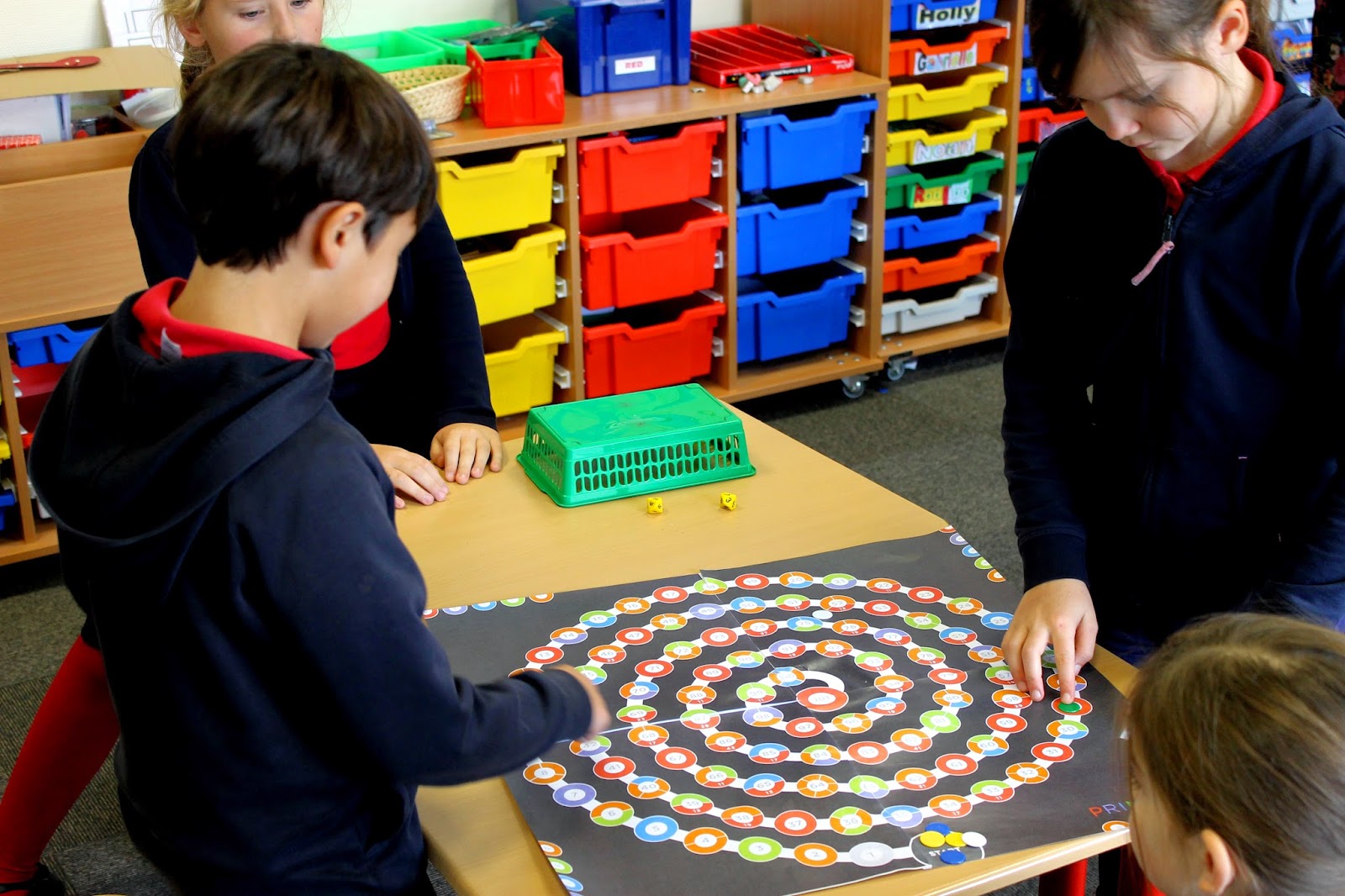
We've been playing Prime Climb again in Year 4.
It's a great game where the aim is to get your pieces to number 101. You roll two dice, and you can add, subtract, divide or multiply the number you're on by one of the numbers rolled. 
If you land on a prime number, you pick up one of the Prime Climb cards. Excitement mounts as the players get towards the centre, and we find it hard to stay in our seats!

Friday, 14 November 2014

Explaining factor trees

As the younger children are walking past our factor tree display, 4G explained it a little to them.

Prime Climb

We're really enjoying playing Prime Climb in Year 4!

Tuesday, 4 November 2014

Factor Trees

Here are some of our factor trees. The flowers at the ends of branches are the prime factors of the number.

Some numbers are prime to start with and so have no branches, no tree.

Monday, 13 October 2014

Thirty

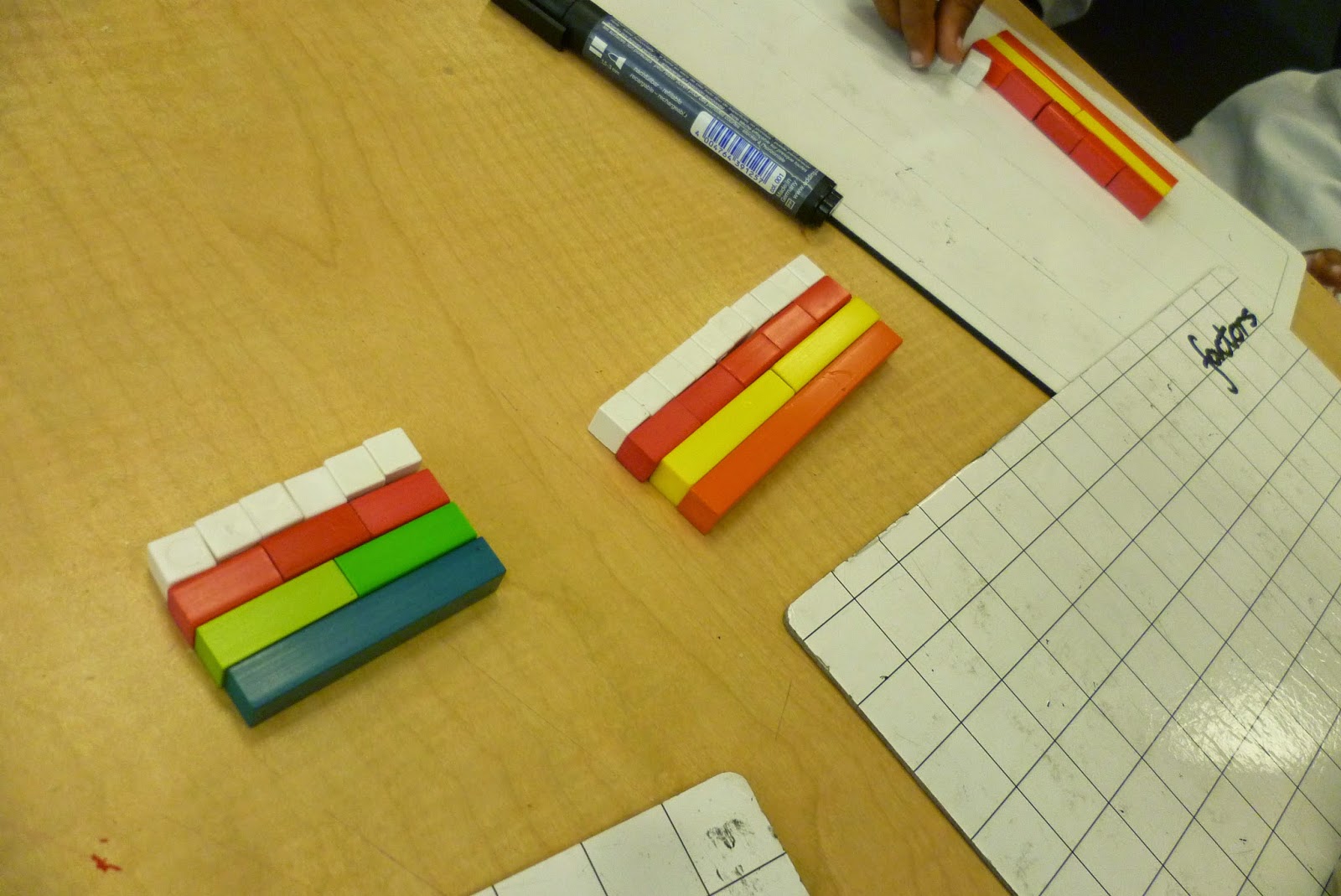
What is the smallest number that has two and five as factors?
 Yes, ten.
 How about the smallest number with two, three and five as factors?
 Yes, thirty. (Mr Gregg had cut some special thirty-rods.)


We had no fifteen rods. Can you see how we've made fifteen?
Oops, we've missed one... six is a factor too!
Now let's make a factor tree of thirty...